

Ever wondered why ancient Roman temples, aqueducts and the stunning multiple arches of the Pont du Gard in Southern France exist after all these centuries, where it’s not unusual to see modern day concrete cracking after several years?
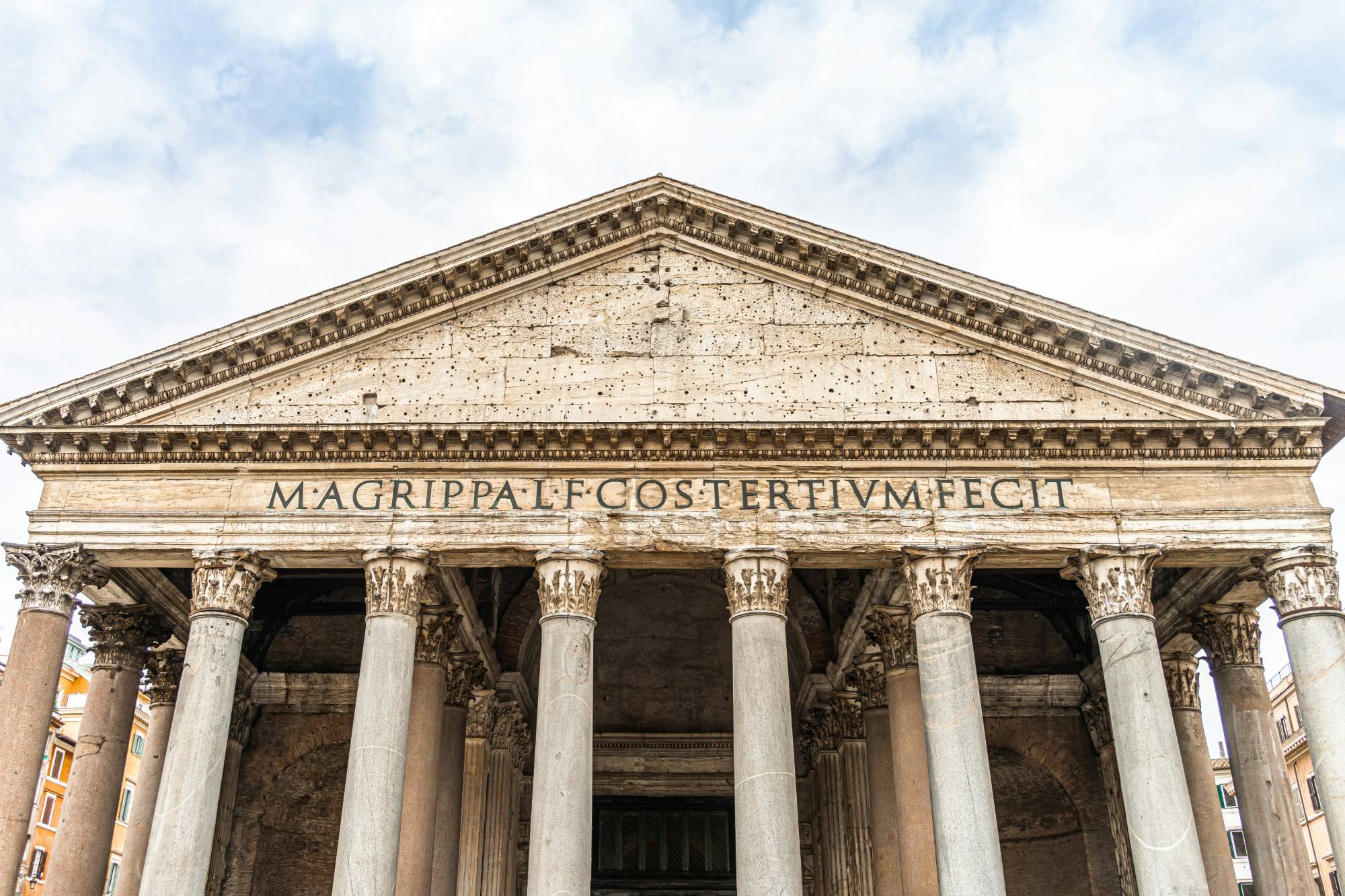
Walk into the Pantheon in Rome and you are standing under a concrete dome built nearly 1,900 years ago. It spans about 43 metres, has no steel in it, and is still the largest unreinforced concrete dome in the world.
The causes of contemporary concrete cracking range from environmental factors and material properties, to construction practices and design decisions. With these sorts of threats to the foundational support for Infrastructure around the world; the revelation of the ingenuity and ultimately the superb, finished concrete produced by the early Romans, makes for captivating reading and teaching following generations and civilisations!
For companies that provide contemporary concrete mixes, as well as one that builds concrete mixers; that is a record worth understanding. For a long time nobody could fully explain it or even understand it. Recent research has filled in much of the picture, and a large part of the answer comes down to how the Romans mixed concrete. Read the full story below ………
Built to Last: What the Romans were working with and what they can teach us today
Roman concrete – known as opus caementicium, was a mix of lime, water and chunky aggregate such as broken stone and brick. It was packed into place in layers rather than poured the way we place concrete today.
Around the Bay of Naples, builders added a volcanic ash called pozzolana, named after the town of Pozzuoli. The ash reacts with lime to form a binder that will even set under water. For decades this ash was the accepted explanation for why Roman work lasted.
However, it was never the whole answer. Modern mixes made with similar ash did not show the same staying power, so something else in the Roman method had to be doing the work.
The clue that looked like a mistake
Roman concrete is speckled with small white lumps of lime, called lime clasts. They had been previously written off as what researchers once thought was resultant of a badly mixed batch.
In January 2023 a team led by Admir Masic at MIT published a study in Science Advances that turned that view around. Working with samples from the ancient city wall at Privernum in Italy, they found signs that the lumps formed at high temperature. That points to the Romans adding quicklime straight into the mix, a method the researchers call hot mixing, instead of slaking it with water first.
The lumps are what let the concrete repair itself. When a crack opens, it tends to run through them. Water entering the crack dissolves calcium from the lump, and the calcium then hardens again as calcium carbonate, closing the gap.
The team tested the idea by casting their own hot-mixed samples, cracking them and running water through. The cracks sealed within two weeks. Samples made without quicklime never sealed.
Sea walls and a building site stopped mid-job
Two other lines of evidence support the picture.
The first is Roman harbour work. Research led by Marie Jackson at the University of Utah, published in 2017, found that seawater soaking through Roman marine concrete grows new minerals inside it. The sea makes these structures tougher over time, where modern concrete in salt water usually goes the other way.
The second is Pompeii. A building site that was under way when Vesuvius erupted in AD 79 has been uncovered there, with raw materials still unmixed beside finished work. It gives researchers a rare look at the Roman method part-way through a job.
A fair comparison with modern concrete
None of this means the Romans made better concrete than we do. They made concrete for a different job. BUT a lot of their concrete structures lasted centuries – which is saying a lot, particularly considering that in their time they didn’t have the advantage of foundational support of structural steel under-pinning or re-inforcing their concrete works.
Roman structures are massive and work almost entirely in compression. Modern reinforced concrete carries far higher loads, spans long distances with slender sections and reaches working strength in days. Roman concrete could do none of that.
Much of the damage we see in modern concrete starts with the steel. Water and salts reach the reinforcement, it rusts and expands, and the concrete around it cracks. The Romans had no steel to rust.
It is also worth remembering that we only see the Roman structures that survived. Many of the famous aqueduct bridges, the Pont du Gard among them, are mostly cut stone. Roman concrete shows best in domes, harbours and walls.
What it means for our industry
Researchers are now working on modern mixes that borrow the self-healing idea. Concrete that seals its own hairline cracks would need less repair and last longer before replacement.
That matters for emissions as well as cost. Cement production is commonly estimated to account for around 8 per cent of global carbon dioxide emissions, so every extra decade of service life counts.
There are real hurdles. Today’s standards demand consistent, predictable strength from every batch, and any new mix has to work alongside steel reinforcement. Roman methods will inform modern concrete; they will not replace it.
The lesson we take from it at CESCO is a familiar one. How long concrete lasts is decided by what goes into the bowl and how well it is mixed.
The Romans worked out their beautiful mix compounds by trial and error two thousand years ago with a self-healing magic formula that has only now been fully understood and appreciated. Now our contemporary concrete industry can still learn about the secrets of the Romans!
Sources and acknowledgements
Written by CESCO Australia. This article was initiated, prompted by a great piece by Marlon Wright in a post Scientists finally unlocked the secret of what made Roman concrete almost indestructible.
- Seymour, L. M. and others, Hot mixing: Mechanistic insights into the durability of ancient Roman concrete, Science Advances, January 2023. doi.org/10.1126/sciadv.add1602
- Jackson, M. D. and others, Phillipsite and Al-tobermorite mineral cements produced through low-temperature water-rock reactions in Roman marine concrete, American Mineralogist, 2017.
- Roman concrete, Wikipedia, for the Pompeii building site and general background.
Image credit: Ayadi Ghaith via Unsplash